
How to disable Wi. Fi on AT& T U- verse gateway and set NETGEAR router in AP mode?
AT&T has carefully created a number of U-verse packages that include the home services you rely on. AT&T has you covered with personalized support for your wireless. Internet, phone or home security service. Welcome to the new. AT&T Support Center. Tech Support 360 is a. See Terms of Service.
NETGEAR routers (i. WNDR4. 50. 0, R6. AP mode feature that helps you connect the router to your existing router or gateway and set up the NETGEAR router in Access Point mode. Steps on how to disable Wi.
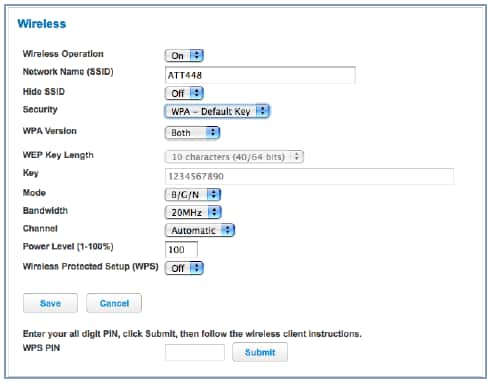
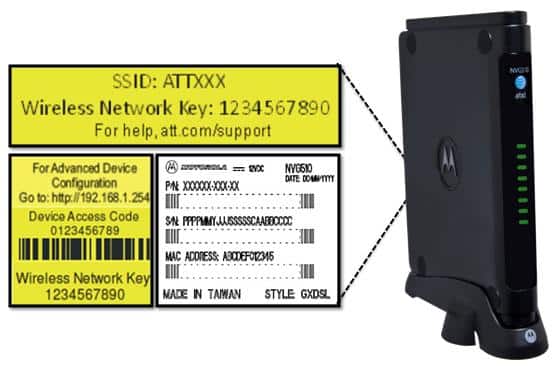
Fi on your AT& T gateway: :Using a computer connected to the AT& T router, open an Internet browser and type 1. Enter the password, if required (the password will be on your gateway unit usually). For R6. 20. 0 and R6. Use other operating mode first. IP Address and DNS Server Address should be set dynamically (which are already selected by default). Connect one end of an Ethernet cable to the WAN (yellow) port of the NETGEAR router, and the other end to the LAN port of the AT& T U- verse gateway.
AT& T U- verse - Wikipedia. AT& T U- verse, commonly called U- verse, is an AT& Tbrand of triple- playtelecommunications services, although the brand is now only used in reference to the television portion of the services. Launched on June 2. U- verse included broadband Internet (now AT& T Internet), IP telephone (now AT& T Phone), and IPTV (U- verse TV) services in 2. Beta testing began in San Antonio in 2.
AT& T U- verse was commercially launched June 2. San Antonio. A few months later on November 3. Houston. In December 2. Chicago, San Francisco, Oakland, Hartford, Indianapolis, and other cities in their vicinities. In February 2. 00. U- verse was launched in Milwaukee. One month later service was initiated in Dallas and Kansas City.
In May 2. 00. 7, U- verse launched in Detroit, Los Angeles, and surrounding areas. Launch continued in Cleveland, Akron, and San Diego in June 2. The Oklahoma City and Sacramento launches occurred in August 2. In November 2. 00. Austin. In December 2.
U- verse was launched in Orlando and St. A controlled launch was also initiated in Atlanta that month marking the first launch in the Southeastern United States. This represents 7% growth quarter on quarter. The actual number of customers is lower, as most customers subscribe to a bundle (such as TV and Phone) and so are counted in both categories. AT& T Entertainment and Internet Services CEO John Stankey explained that the new platform would offer .
An AT& T spokesperson denied that U- verse was being shut down and explained that the company was . AT& T CFO John Stephens had also previously stated that Direc. TV's larger subscriber base as a national service gave the service a higher degree of leverage in negotiating carriage deals, thus resulting in lower content costs. In the more common FTTN deployment, fiber- optic connections carry all data (internet, IPTV, and voice over IP) between the service provider and a distribution node. The remaining run from the node to the network interface device in the customer's home uses a copper- wire current loop that is traditionally part of the PSTN (public switched telephone network).
In more recently constructed housing developments, AT& T uses an FTTP deployment—they run fiber- optic cable from their DSLAM all the way to an optical network terminal in the customer's home. In areas where AT& T deploys U- verse through FTTN, they use High- speed digital subscriber lines with ADSL2+ or VDSL technology. Service offerings depend on the customer's distance to an available port in the distribution node, or the central office.
To qualify for U- verse TV service (only available through VDSL2), the customer must be less than 3. VRAD, the VRAD must contain an available port, and the copper wire- loop must pass qualification. Where pair bonding is available, the maximum service distance can extend to 5.
In so- called . In practice, VRADs are not installed in many older urban neighborhoods as AT& T prepares to abandon the fixed- line broadband market. Transmissions use digital. H. 2. 64 (MPEG- 4 AVC) encoding, compared to the existing deployments of MPEG- 2codec and the discontinued analog cable TV system. The receiver box does not have a RF tuner, but is an IP multicastclient that requests the channel or . U- Verse TV supports up to four/six active streams at once, depending on service tier. The system uses individual unicasts for video on demand, central time shifting, start- over services and other programs.
U- verse TV packages. All subscribers receive at least the equivalent of the U- family package, which also includes 6. Stingray Music channels. Many U- family channels were also available on the historical U- basic package. Paquete Espa. Additionally, channels grouped as Internationals are available a la carte in language groups or singly, and a number of premium movie packages are available to premium package or higher- tier subscribers. High- definition TV technology is required to access HD channels.
On February 2. 9, 2. U- verse member channels: ATTention (channels 4. SD and 1. 10. 0, 1. HD), Buzz (channels 3. SD and 1. 00. 0, 1. HD), Front Row (channels 1. SD and 1. 84. 7 in HD), Showcase (channels 8.
SD and 1. 80. 0 in HD), Sports (channels 6. SD and 1. 60. 0, 1. HD), and U- verse Movies (channels 2.
SD and 1. 20. 0, 1. HD) were removed from the AT& T U- verse TV channel lineup.
Channel groupings. The west feed is specified by adding . For certain time- delayed channels, both the east and west feeds are available to all subscribers; otherwise only the east feed (for the Central and Eastern time zones) or only the west feed (for the Pacific and Mountain time zones) is available, even though two channel numbers are assigned to the feeds.
With the exception of California, Nevada, and westernmost parts of Texas and Kansas, the U- verse 2. Central and Eastern time zones. High- definition: With few exceptions, the numbers of high- definition TV channels are found by adding 1.
HD callsigns are found by appending . West feed callsigns typically append . Most HD channels appear in the HD Services package, while the HD Premium Tier package contains approximately 2. Local: All local broadcast channels are identified by the station's callsign and over- the- air virtual digital channel number (e. Local stations appear in the ranges 2- 6. A national channel may also appear as a local channel or affiliate in the minimum package in available markets; in some such cases, the national channel is not available in the market where the local channel or affiliate appears. Sports: Channels in the 6.
The Sports Package is included with the U4. Regional: Channels in the 7. Subscribers each automatically receive channels that are regional to them, based on geography, in standard- and high- definition.
Subscribers who wish to receive out- of- market regional channels (typically for sporting) must subscribe to the HD Premium Tier package, which includes most of the other regional channels. According to league rules, sports blackouts do apply, but rebroadcasts of games may be available out- of- market.
Chicago Cubs home games televised by WGN are provided to all subscribers, who are not blacked out even if their local teams are playing at Wrigley Field. Carriage negotiations. An AT& T spokesperson stated, .
If they are really serious, my team and I are ready for truly fair negotiations. AT& T stated that Rainbow, .
All of Univision's channels were later returned to the U- verse lineup on March 2. Basic, Express, Pro, Elite and Max (VDSL) are usually available for self- installation. Max (ADSL2+), Max Plus, and Max Turbo can be self- installed if only one jack is connected for DSL (through a splitter installed by a technician), or splitter- free if no landline shares the pair. Conditions where higher speeds are still attainable through filters or quality wiring to more than one jack occur less often. AT& T announced Internet 4. ADSL2+ is limited to a maximum of 1 Mbit/s upload in areas that do not offer U- verse TV. Name. Download Speed (up to)Upload Speed (up to)Connection.
Notes. Internet Basic 5. Mbit/s. 1 Mbit/s. VDSL or ADSL2+. This phone service is digital and provides a voicemail service accessed by *9. Customers who subscribe to both AT& T Phone and U- verse TV get features such as call history on channel 9. TV, and . AT& T Phone includes Caller ID, Call Blocking, Anonymous Call Blocker, and many other calling features.
AT& T Phone was first available in Detroit, on January 2. These models are both composed of circuit boards providing service, which are fed by fiber. FTTN (fiber to the node) systems use model 7. The 7. 33. 0 ISAM is an internet protocol DSL access multiplexer that supports VDSL and ADSL protocols. The 7. 34. 0 then connects to a serving area interface, which distributes service to homes in the neighborhood, via a dual strand fiber, which then splits into 3.
The fiber pairs typically lead to a customer's residence at the network interface device. The VRAD typically connects upstream to an Alcatel- Lucent 7. Ethernet service switch in the central office hub, then to the headendvideo hub office. They also provide TV receivers made by Cisco (through Scientific Atlanta) and Arris (from the former Motorola cable division) (including standard receivers, wireless receivers, and DVR receivers). Those eligible for triple play (TV, Internet, and Phone) will use a VDSL2 transport link which uses one of the following modems: 2. Wire 3. 60. 0 (Deprecated)2. Wire 3. 80. 0 (Deprecated)2.
Wire 3. 80. 1Pace 5. NV2. Wire i. NID (which comes with the 2. Wire i. 38. 12. V for the outside unit, the i. PSU (Intelligent Power Supply Unit) which powers the i.
V, and one or more i. HG for internet access via wireless or ethernet connectivity inside the customer premises) (Deprecated)Arris NVG5. Arris NVG5. 99. Pace 5. ACThose who are eligible for double play (Internet and Phone) only, will use an ADSL2+ transport type which uses one of the following modems: 2. Wire 2. 70. 1HGV- B (the model number must contain a . The Motorola NVG5.
Wire i. NID for all bonded pair installs. The NVG5. 99 and 5. AC both have replaced the NVG5. These three devices are capable of both ADSL2+ and VDSL. All AT& T U- verse transport types use 8. This means only equipment on AT& T's approved list works with the U- verse service, as other (non- AT& T) equipment cannot authenticate with AT& T DSLAMs and GPONs.
Another side- effect of U- verse's authentication protocol is the lack of bridge mode support (unlike standard DSL that uses PPPo. E authentication, which is easily bridgeable).
At best, the 2. Wire/Pace routers support DMZ+ mode, while the Motorola devices support IP Passthrough. AT& T allows residential and business customers to pay for static IP addresses, which they support on all AT& T approved equipment (including the 2.


/http%3A%2F%2Fakmedia.digidesign.com%2Fsupport%2Fimages%2FPC%20Wizard%20w-Box%20smaller_45577.jpg)
/https%3A%2F%2Fupload.wikimedia.org%2Fwikipedia%2Fen%2Fthumb%2F1%2F12%2FPrevious_Versions_Vista.png%2F300px-Previous_Versions_Vista.png)
/http%3A%2F%2Fwww.wikihow.com%2Fimages%2F1%2F15%2FCreate-Recovery-Discs-for-Windows-Vista-in-HP-Recovery-Manager-Step-11.jpg)
/http%3A%2F%2Fassets.aten.com%2Fproduct%2Fimage%2FCS1734A-Desktop-KVM-Switches-OL-large.jpg)